

The VRA Was the Nice Version
SCOTUS has forced our hands, and now patience is our enemy.
Today we have another guest post from the unknown writer, a.k.a. “Gracchus,” an insider with things to say.
The question for every Democrat right now isn’t whether you’re outraged by what the Supreme Court did in Louisiana v. Callais. Obviously, you are. The question is what you’re prepared to do about it, and whether you’ve figured out that the Democrats wringing their hands over “the legitimacy test” are reading the test wrong.
Some Virginia Democrats are considering a state law that would set a mandatory retirement age for the commonwealth’s Supreme Court. The aim isn’t subtle: clear the bench, seat new judges, get a different ruling. Other states are eyeing their maps. There’s a real debate within the party about how far to go and whether the so-called nuclear options would cost us something we can’t get back.
Take former Congressman Jim Moran, who said the idea of replacing the Court was a “bridge too far,” and “We do have to keep our credibility. We have to do things that pass the legitimacy test.”
Moran and others like him are asking the wrong question. To paraphrase the words of the legendary Rowdy Roddy Piper, it’s time to change the question. More on that in a minute.
The Bargain
First, let’s be honest about what the Voting Rights Act actually was, because everything here on out flows from it. It wasn’t a gift, not charity, and definitely not some magnanimous extension of democracy to people who’d been waiting their turn.
It was architecture. Lyndon Johnson, who had few illusions about how power actually worked, understood something the current Court either doesn’t know or doesn’t care to.
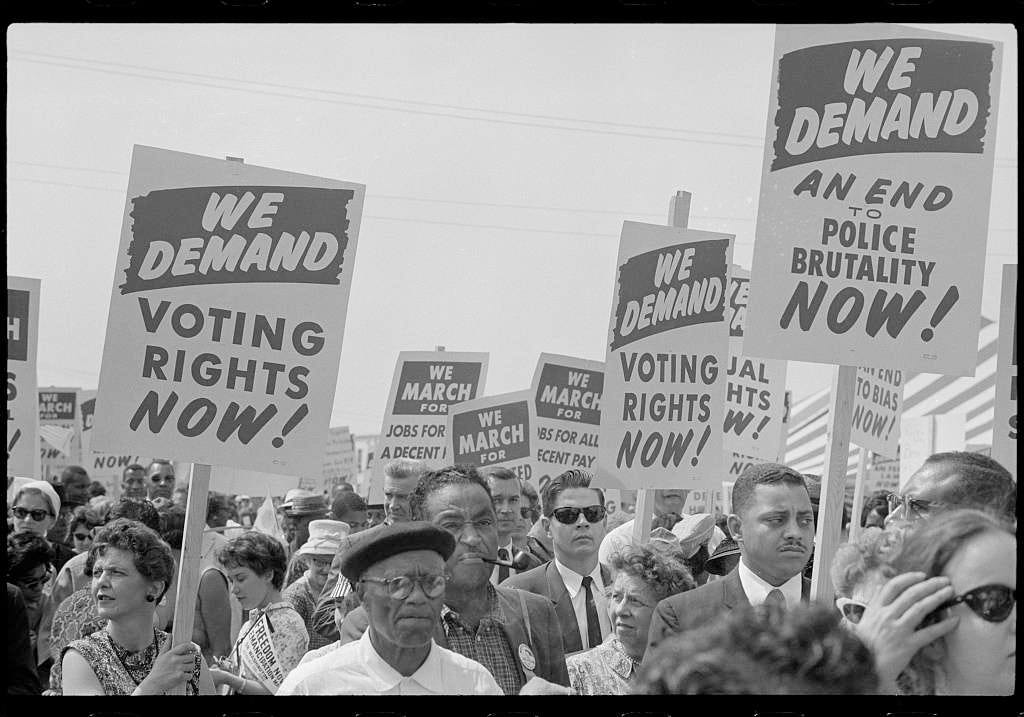
The bargain was simple: your participation produces results, so stay in the game.
That deal wasn’t made for the benefit of Black Americans alone, though it was Black blood that paid for it. It was made for the benefit of a country that needed a working, peaceful way for people with every reason in the world to burn the whole thing down to instead choose to work within it. The VRA wasn’t just the nice move — it was the smart one. Its purpose was to keep legitimate grievance inside the system rather than outside it.
Now they’ve put it back outside.
The Calculation
Here’s what rational actors do when the terms of a bargain get blown up: they reassess. Not out of rage. Rage isn’t a decision, it’s a reaction. They reassess out of the perfectly reasonable question of whether participation is still worth what it costs them, given that it no longer seems to be producing anything.
This isn’t a threat. It’s decision theory. And the people doing that math right now aren’t a base or a constituency to be managed in a slide deck. They’re Americans who’ve been told for generations that the system works if you work it, and who have watched, for those same generations, as the rules got quietly adjusted the second they started winning anything inside them.
“We are out of the patience business. Patience is the enemy now. Patience is what people with power ask of people without it, and it gets asked again every time another court ruling or another statute or another “norm” is used to lock the door a little tighter.”
We are out of the patience business. Patience is the enemy now. Patience is what people with power ask of people without it, and it gets asked again every time another court ruling or another statute or another “norm” is used to lock the door a little tighter. The Democrat counseling patience, the one saying we can’t break the rules even as the rules are being rewritten against us in real time, is doing the work of the people doing the rewriting.
Let’s be honest about who is doing this, too. This isn’t abstract conservatism, and it isn’t “polarization.” It’s an alliance between oligarchic money and extremist movements, and it isn’t particularly subtle. The oligarchs want a permanent ruling class. The extremists want a permanent underclass to grind a boot into. The deal between them is straightforward enough: the oligarchs get captured courts and permanent tax cuts, the extremists get their hierarchy of human worth written back into the law, and the country becomes a holding pen.
That’s the project. It’s what’s being built behind every gutted protection and every gerrymandered map, by judges confirmed by senators who represent a minority of Americans and now write the rules for the rest of us. These aren’t mistakes, and it isn’t overreach. They are doing exactly what they came to do.
The French Revolution Question
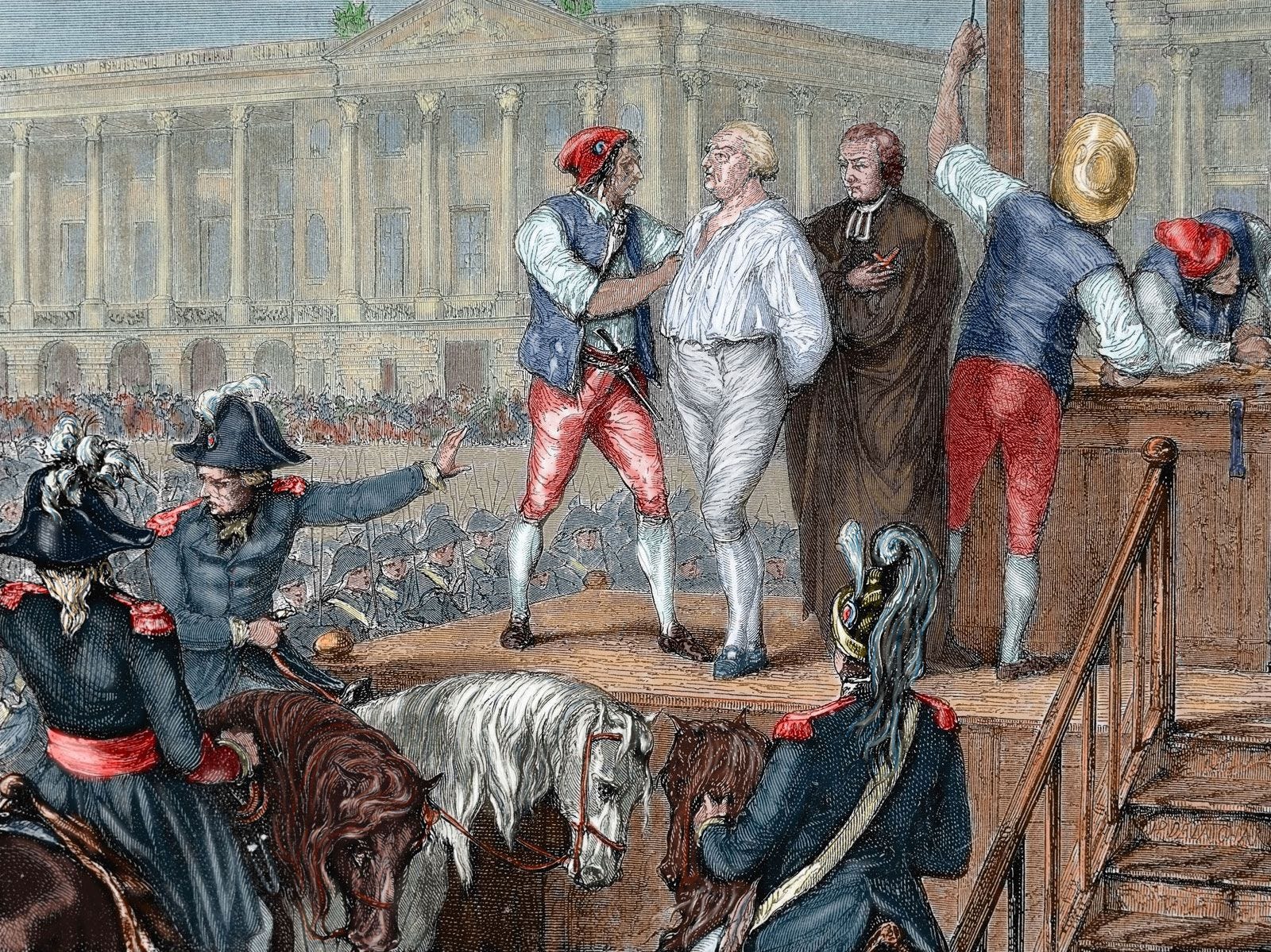
You don’t have to be a student of revolutionary France to understand what happens when every legitimate channel for grievance gets closed off. The grievance doesn’t disappear. It changes shape. The dark side isn’t more powerful, it’s just quicker. Hatred takes no architecture. Division doesn’t have to build anything to do its work. The people who just gutted the Voting Rights Act picked the quick path, which is also the path that ends in rubble.
This is what the legitimacy-test Democrats refuse to see. They keep framing the choice like this: do we do it the nice way, or the ugly way, to get the same result? That isn’t the question.
The question is whether this country holds or comes apart, and coming apart doesn’t mean a stern editorial in The Atlantic. It means what it has always meant, every time a society told a critical mass of its members that their participation was decoration. It means blood. It means whole regions of this country deciding that the social contract is a piece of paper the other side already burned, and they’re under no obligation to honor a corpse.
That’s the alternative. Not inconvenience, not even a bad news cycle. That.
The Real Test, Not “Legitimacy”
So, with that settled, when someone asks whether passing a law in Virginia to seat judges who’ll actually follow the Constitution is “legitimate,” the honest answer is, legitimate compared to what?
Compared to a Court installed by presidents who lost the popular vote, confirmed by senators speaking for a minority of Americans, and now rewriting election law to lock in the minority that put them on the bench?
Legitimate compared to maps drawn so the people drawing them physically can’t lose?
Compared to a project whose stated goal is permanent rule over a deliberately constructed underclass?
The legitimacy test isn’t whether we use the tools the system still gives us. It’s whether we use them to restore the bargain or to replace it with another rigged version. That’s a real test, and we should hold ourselves to it. It’s just not the test the timid are pretending it is.
Elected officials owe their loyalty to us, not the other way around. Not to a Court that has decided our votes are worth less than other people’s. Not to “norms” one side walked away from a decade ago that the other side still clutches like a security blanket. To us. To the people whose participation was supposed to produce results, watching to see if it still does.
How to Say It
This is also a messaging problem, and Democrats have been losing it badly. The minute Virginia passes a retirement-age law, the minute a blue state redraws a map in response, every reporter in Washington files the same story. Democrats are abandoning norms. Democrats are escalating. The horse race eats everything. The framing becomes which side broke the toy, never what the toy was for or who smashed it first.
Democrats have a message that blows that framing apart, and they have got to actually use it. This isn’t Democrats versus Republicans anymore. It isn’t about giving the party power for the sake of power. We’re not trying to win a cycle. We’re trying to keep a country.
There are two ways this gets resolved:
Door one is elected officials using every lever the system still gives them to restore a bargain in which participation actually produces results.
Door two is what’s happened every other time in human history that a critical mass of people figured out their participation was decoration.
We’re choosing door one. That is the entire reason we’re doing this. Anyone covering it as a tit-for-tat fight between two parties is missing the story, and they should be told so, by name, on the record.
When a Democrat in Richmond gets asked whether the retirement-age law is “playing politics,” the answer is no. We aren’t playing politics. We’re trying to keep this thing from coming apart. The people who gutted the Voting Rights Act are playing politics. We’re doing the unglamorous work of making sure their game doesn’t end the country.
That’s the message. It’s bigger than us. Has to be, because it’s true, and because anything smaller will lose.
What Comes Next
The VRA was the nice version. The version that said: here’s a door, it’s open, your voice has weight, use it. They’ve closed the door. They closed it on purpose, knowing exactly what they were doing, because the people behind it had started to win.
The question for any Democrat running for anything in the next four years isn’t whether you oppose what the Court has done. Of course you do. The question is whether you understand what it means: what it broke, what it’ll cost, what you’re willing to do to hold this country together while there’s still a country to hold.
The answer is not a better legal brief. It’s not another press release of outrage, though outrage is correct. The answer is the nerve to use every lever the system still gives us, and the discipline to say out loud what we’re using them for. Not to win the next cycle. To rebuild the conditions in which participation isn’t a sucker’s bet. To restore the bargain before the people we’ve asked to keep faith with it conclude, reasonably, that they’re done.
Because the alternative isn’t a slightly worse version of normal. It’s the thing none of us want to live through.
Someone should say it.
 | A guest post by
|
"Those who make peaceful revolution impossible will make violent revolution inevitable."
Everyone needs to grapple with this. We may not all come to exactly the same conclusion, but these are the right questions.