

Dems, You're a Bear. Act Like It.
Money in Politics. Dems keep batting at it. It's time to use the claws. Here's how.
There’s a scene in Swingers that every guy who came of age in the late ‘90s can still half-quote. Vince Vaughn’s Trent is trying to pump up a hopeless, heartbroken Jon Favreau/Mikey before he goes and talks to a woman. He tells him what he is: a bear. Big claws. Big fangs. And the girl at the bar Mikey wants to approach is just a bunny.
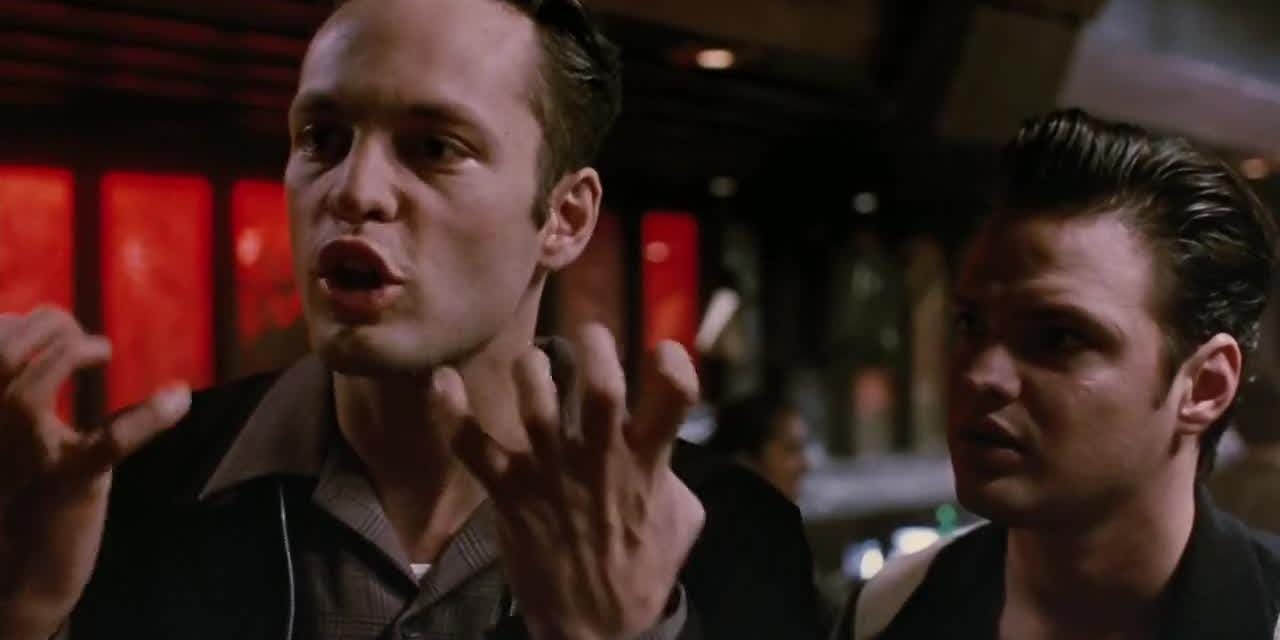
And the joking point Trent makes is that Mikey isn’t missing any equipment. The guys keep telling him he’s “so money” and doesn’t even know it. He says Mikey is just standing there staring at his own claws, gently batting the bunny around, too timid to use what he obviously has. Don’t be the guy everyone’s politely rooting for in the PG-13 version, Trent tells him. Be the other guy in the R-rated movie. The one you’re not even sure you like yet.
In short: Stop being so afraid of what you got. Effing use it.
I think about that scene every single time a Democrat says the words “overturn Citizens United.”
Because that’s us. Yes, we are the timid bear who won’t use the claws.
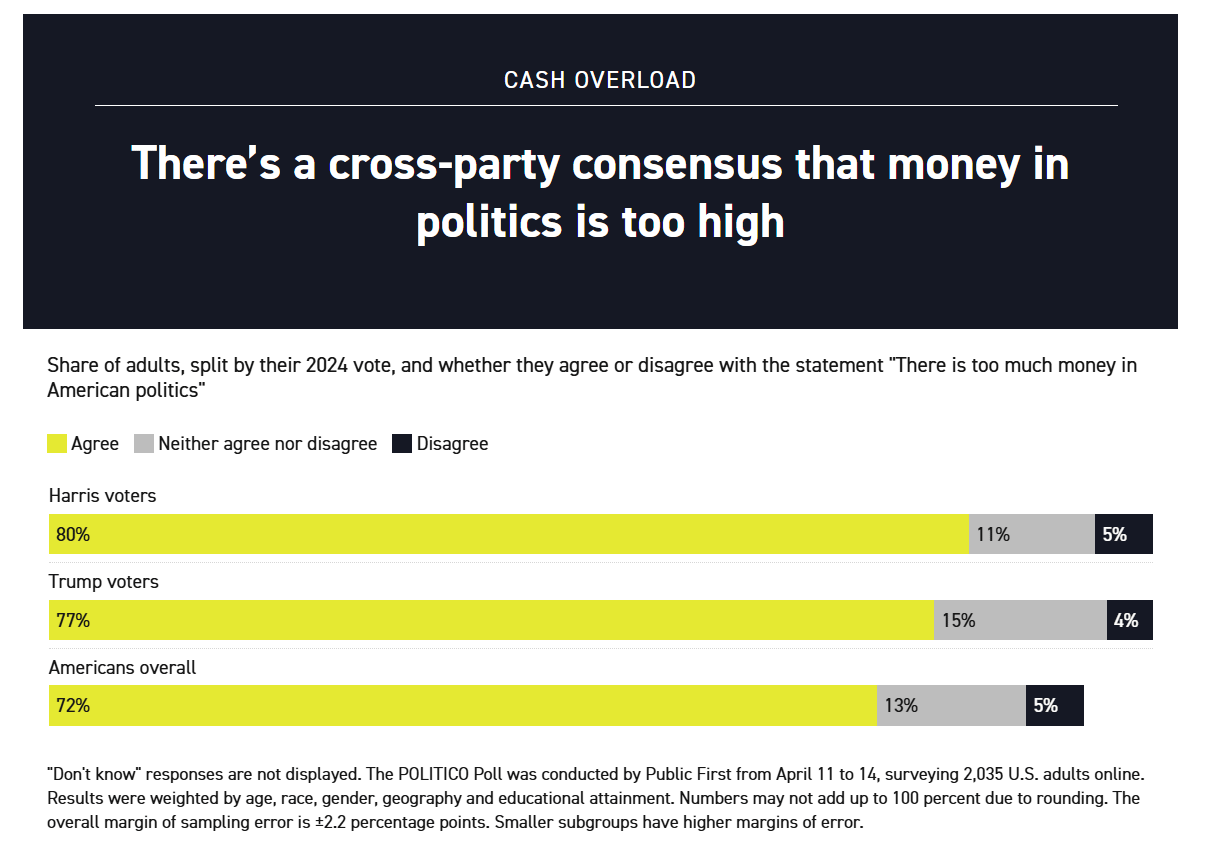
We have one of the most resonant issues in American politics sitting right in our lap — everybody, left, right, and checked-out, hates that our elections are bought — and what do we do with it? We gently bat it around with a slogan that is, literally, the name of a 2010 court case. We’ve turned ourselves into the do-gooder everybody’s quietly rooting for… and nobody actually believes will win.
…
Quick test: Ask ten people at the grocery store what “overturn Citizens United” means. You’ll get two who can explain it. Maybe. If it is a grocery store around DC, or the one where people all go after a No Kings protest. The rest will nod the way you nod when a doctor uses a word you’re too embarrassed to ask about, like “paresthesia1.”
And it gets worse when you actually explain it.
Overturning Citizens United doesn’t get the money out — not even close. All it does is let Congress maybe pass a few limits down the road, the kind lobbyists carve up in committee before anybody’s read them. So we picked a phrase no normal person understands to sell a fix that lets people down the minute they finally get it. Hell of a rallying cry.
That’s not a North Star. It’s not going to make voters get excited. It’s just batting around the bunny.
We need claws. We need a North Star.
The North Star We Need
But, here’s what those same ten people in the store get instantly: rich people and corporations buy our elections, and you don’t. Want that to stop? Every hand in the store goes up. There are your claws. Use them.
What’s that look like? Like this: A balls-to-the-wall Constitutional amendment that doesn’t play nice.
Ban private money from politics. Publicly finance campaigns. Don’t ask the Supreme Court nicely. Don’t hand Congress a permission slip to maybe do something someday if we’re sweet about it. Tear the bought-system down to the studs and build a new one by constitutional mandate: candidates funded by the public, period; no private donations buying access; nobody but the publicly funded campaigns paying a modest amount to get on your television in October.
Make sure you close loopholes before they’re loopholes. Fifty years of “reform” has sprung a fresh leak the week after every fix. This one is built to hold.
Oh, but you want wonky, too? You want me to show you can write that into an amendment realistically? Fine. Here’s the text, as I see it:
The 29th Amendment2 to the Constitution of the United States
The Anti-Corruption Amendment
(informally known as the “Balls-to-the-Wall Amendment”)
Section 1. The freedoms of speech and of the press shall not be construed to prevent the United States or any State from regulating or prohibiting the raising, spending, or contribution of money to influence an election for public office.
In Plain English (IPE): The US and states can regulate the hell out of money in politics. Eff you, Supreme Court.
Section 2. Congress shall provide by law for the public financing of elections to federal office and shall appropriate funds sufficient for that purpose. Candidates for federal office shall be financed only through that system, and no candidate, party, or committee shall solicit or accept private contributions to elect candidates to federal office. Congress may require a candidate to demonstrate public support through small contributions to qualify for financing; any contribution made to qualify shall be paid into the public fund and shall not be spent by or for the candidate. The States shall have the like power as to their own elections.
IPE: Candidates get public money for their campaigns and cannot raise or spend any more than that. Period. And if we want to make them raise a number of small donations to prove they have viability as a candidate, that money all goes into the fund. Eff you, Supreme Court.
Section 3. No person, other than a candidate’s authorized committee spending public funds under Section 2, shall pay another to publish, broadcast, or distribute an electioneering-related communication. This Section does not reach a person’s own speech, writing, or publication disseminated without paying another to disseminate it, nor the hiring of others to produce that person’s own communications.
IPE: Outside groups and people can’t buy ads to affect elections anymore. Seven-figure ad buys from big oil to beat someone who hates them aren’t protected speech anymore. Eff you, Supreme Court.
Section 4. An electioneering-related communication is one made for payment that expressly advocates the election or defeat of a candidate, or that identifies a candidate for public office and is disseminated during the sixty days ending with the close of voting in a primary or general election. A candidate is identified by name, by likeness, or by a description aimed at that person, but not by reference to a public office or to its holder in an official capacity. This Section does not reach speech disseminated without payment.
IPE: Paid issue ads are fine. But in the 60 days before voting ends, they can’t name a candidate, show their face, or describe them in a way that obviously points at one person, as a backdoor way to run attack ads while claiming it’s “just an issue.” You can still tell people to “call your Congressman” — you just can’t put a target on a specific human being. Eff you, Supreme Court.
Section 5. The news and editorial content of a bona fide press entity is not subject to Sections 3 and 4. An entity is bona fide only if it has published or broadcast on a regular schedule for at least one year before the election and continues to do so, and makes its content available to the public rather than only by unsolicited distribution. This exemption covers only the entity’s own content, and not advertising it carries for another.
IPE: Real news outlets keep doing their thing — report, endorse, etc. All of it stays fully protected. But you can’t spin up a fake “news outlet” for a few weeks around an election to sneak around the rules. And a legit outlet can’t rent out its pages or time either: it can’t sell or donate ad space to an outside group as a workaround, because that’s just buying someone else’s megaphone. Eff you, Supreme Court.
Section 6. Congress and the States shall require timely public disclosure of the source and amount of spending governed by this Article above a threshold sufficient to exempt speech of minor cost.
IPE: We still require spending disclosures to make the bans enforceable. You have to be able to follow how the public campaign funds get spent, who’s paying for the issue ads that are still legal, and enough of a trail to catch anyone breaking the rules above. Eff you, Supreme Court. The regular person who spends a few bucks on flyers or a URL doesn’t have to report a thing.
Section 7. Spending coordinated with a candidate, party, or their agents shall be treated as a contribution prohibited by Section 2. Congress shall have power to enforce this Article by appropriate legislation, and shall vest its enforcement in an independent body constituted to prevent partisan deadlock. Laws enacted under this Article may strengthen, but not weaken, its limitations and protections.
IPE: Outside spending can’t be secretly coordinated with a candidate or party — if it is, it counts as an illegal donation and both sides get punished. Enforcement goes to an independent watchdog built so it can’t deadlock along party lines (i.e., the toothless FEC we have now).
Section 8. Nothing in this Article shall restrict the right of any person to speak, write, publish, assemble, or petition concerning a candidate, officeholder, or public question by that person’s own voice, labor, or property and without paying another to disseminate it.
IPE: If you’ve got a voice, nobody can stop you from using it. Your speech, your writing, your yard sign, your own posts, all untouchable. If you actually own a megaphone (say, a privately held media company) and use it to speak out, we can’t stop that either, knowing it would lead to the regulation of legitimate news media. What’s banned now is using someone else’s megaphone: paying to blast your message through channels you don’t own. So nobody gets to rent a bigger microphone than the next person.
Section 9. Congress shall provide for the orderly transition to public financing. Sections 2 through 4 shall take effect with the first regular federal election occurring at least one year after ratification. This Article shall be inoperative unless it has been ratified within seven years of its submission to the States.
IPE: We know this stuff takes time to build, so the public-financing pieces (Sections 2–4) don’t switch on right away. They kick in at the first federal election that’s at least a year after ratification, so roughly one to two years out.
There it is. A blowtorch to money in politics. No nibbling around the edges or only dealing with one aspect.
Is it passing next year? No.
North Stars don’t pass next year. That is not what they’re for. A North Star tells people what you’re for. What the end goal you’ll scrape and kick and fight for looks like. What the end of the story you’re telling them is. It also tells voters that you finally, at long last, understand the story of our corrupt politics the same way they do at their own kitchen table, with a plan the size of the problem instead of a citation and a shrug.
It doesn’t mean you can’t “overturn Citizens United” on the way to this goal. But that limited step can’t be the goal.
Going this big also dares the other guy to answer.
Let the Republicans stand up and explain why making it illegal to buy an election is a bridge too far. Let them defend the super PACs, the dark money, the donors who own them. Let the whole country see which one is really the party of corruption.
Stop staring at the claws you have.
Be the bear that uses them.
It’s the slogan of this whole Substack: Better fights. Better instincts. Better party.
Relax. Paresthesia means the “pins and needles” feeling, like when your leg falls asleep.
The yet-to-be-published ERA is the 28th Amendment, rightfully.
This proposal deserves to be blasted far and wide. I'm so sick of firmly worded objections and limp half-measures.